
Goodbye Pure Petrol: India’s Roadmap to 100% Ethanol-Blended Fuel

India is hitting the gas on its green energy transition. Just as the nation settled into the comfort of E20 (20% ethanol-blended petrol), the Ministry of Road Transport and Highways (MoRTH) has raised the stakes.
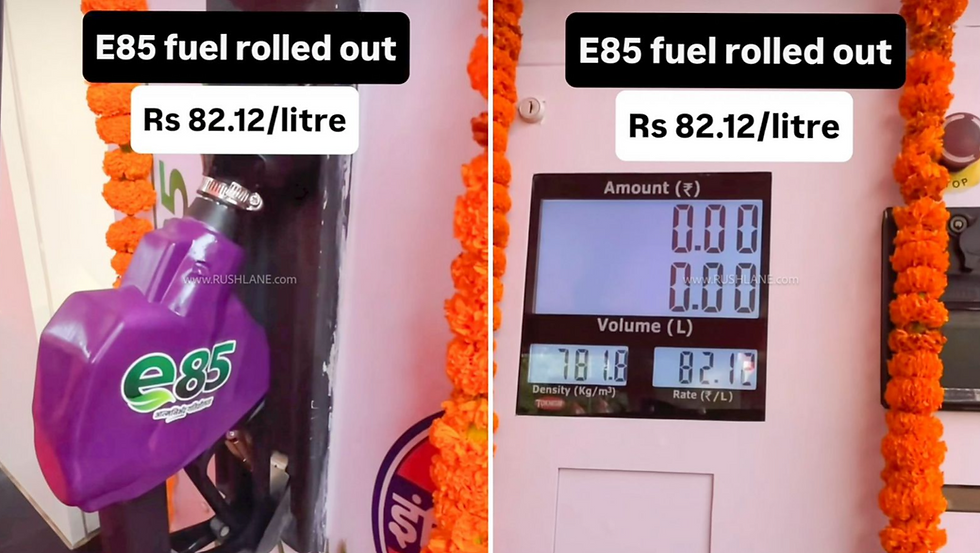
In a landmark draft notification issued in late April 2026, the government proposed new rules to officially incorporate E85 and E100 fuels into the country’s regulatory framework. This isn't just a minor tweak; it’s a full-throttle push toward Flex-Fuel Vehicles (FFVs) and total energy independence.
What’s New on the Dashboard?
The proposed amendments to the Central Motor Vehicles Rules, 1989, signal a shift from simple "blending" to "substitution." Here are the key highlights:
E85 & E100 Standards: For the first time, the government is setting formal emission and testing standards for vehicles running on 85% and nearly 100% ethanol.
Expansion of Vehicle Categories: The rules aren't just for cars. The door is now open for two-wheelers, three-wheelers, and heavy vehicles to adopt high-ethanol engines.
Weight Class Update: The gross vehicle weight limit for certain emission testing categories is being increased from 3,000 kg to 3,500 kg, aligning Indian standards with global norms for light commercial vehicles (LCVs).
Biodiesel & Hydrogen: The proposal also includes provisions for B100 (100% biodiesel) and updates the nomenclature for Hydrogen-CNG fuels.
Why the Rush for Ethanol?
India’s ethanol journey has been a rare policy success story. Having achieved the 20% blending target in late 2025—well ahead of the original 2030 deadline—the government is capitalizing on several factors:
Energy Security: By replacing imported crude with "homegrown" fuel, India aims to slash its massive oil import bill, which is often at the mercy of global geopolitical tensions.
Farmer Prosperity: Ethanol is produced from sugarcane, maize, and surplus rice. Higher blending means a guaranteed market and better prices for Indian farmers.
Environmental Gains: Ethanol is a cleaner-burning oxygenate. Shifting to E85 or E100 significantly reduces tailpipe emissions of carbon monoxide and hydrocarbons.
The Reality Check: Challenges Ahead
While the vision is bold, the road to E100 has a few speed bumps that both manufacturers and consumers need to consider:
The Engine Compatibility Gap: Most vehicles currently on Indian roads are optimized for E10 or E20. Running these on E85 or E100 without modification can lead to engine corrosion and seal damage.
The Mileage Trade-off: Ethanol has a lower energy density than pure gasoline. Users can expect a 3–7% drop in mileage as the ethanol percentage increases.
Infrastructure Overhaul: Moving beyond E20 requires a massive rollout of Flex-Fuel engines and specialized dispensing pumps at fuel stations across the country.
Pro Tip: If you bought a car in India after April 2023, it is likely already E20 compatible. However, for E85 or E100, you will eventually need a dedicated Flex-Fuel Vehicle (FFV).

The Road Ahead
The draft rules are currently open for public consultation until late May 2026. Once finalized, they will provide the legal "green light" for automakers to start mass-producing Flex-Fuel engines for the Indian market.
India’s message is clear: the future of Indian mobility isn't just electric—it’s bio-powered. Whether you're a commuter looking for cheaper fuel or a farmer growing the next tank of gas, the shift toward E100 is a game-changer for the "Atmanirbhar" (self-reliant) energy mission.
--- By Mr. Sandeep Maurya
( Ethanol Plant consultant )


Comments